
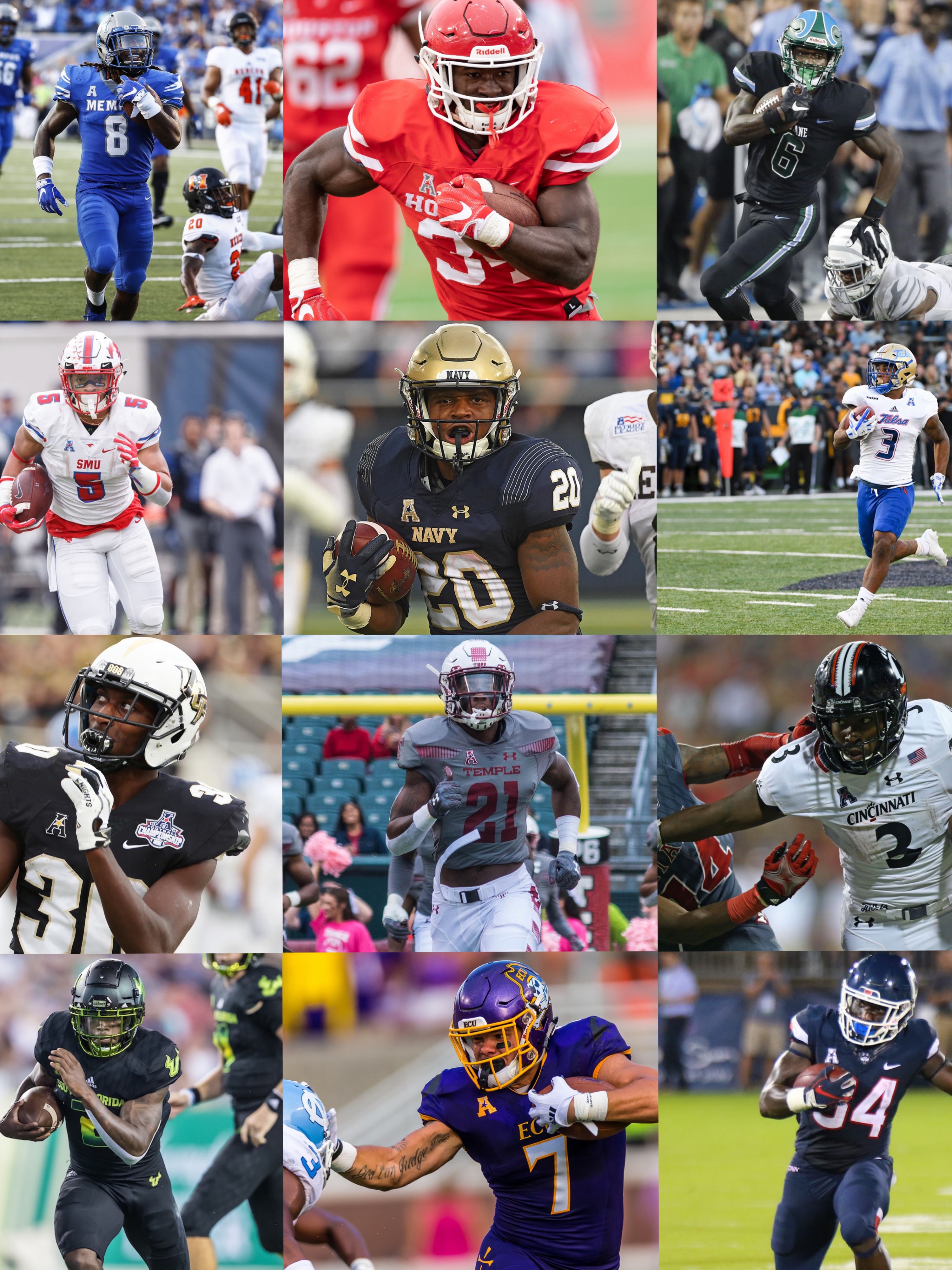
There is no doubt that the 2018 AAC Champions, the University of Central Florida, has one of the most powerful Group of 5 teams since their turn around from going 0-12 in 2015, to 12-0 in 2017. Although UCF has been very dominate in the past two seasons, we cannot count any of the other teams in the conference out. Here is the break down of the East and the West in the AAC:
The AAC East:
The AAC East is home to Central Florida, Temple, Cincinnati, South Florida, Eastern Carolina, and Connecticut. Here are their statistics from the 2018 season, and what you can expect this season from each team.
University of Central Florida: Despite losing their first game in two seasons in the Fiesta Bowl (LSU 40-32), UCF Finished 11th in the final AP poll of the 2018 season. The team averaged 17.2 pass completions on 30.2 attempts per game, with starting quarterback McKenzie Milton finishing the season with 171 pass completions on 289 attempts. Milton finished the season with 2663 passing yards, while quarterback Darriel Mack Jr. had 51 completions on 100 attempts for 619 yards during the 2018 season. During the season, the team 45.6 rushing attempts for 266.1 yards. Leading rusher, Adrian Killins had 147 attempts for 715, scoring 4 touchdowns (Killins also had 19 receptions for 377 yards, scoring 4 touchdowns). Greg McCrae had 133 attempts for 1182 yards, scoring 10 touchdowns (McCrae had 8 receptions for 116 yards, scoring 1 touchdown). Not only was UCF a solid rushing attack, but they proved that they could get things done in a passing attack too. Receivers Gabriel Davis and Dredrick Snelson combined for 96 receptions for 1503 yards, scoring 12 touchdowns. The offense was not the only highlight for the knights, but the team’s defense combined for 14 interceptions (Richie Grant lead the team with 6), and 14 fumble recoveries (Nate Evans lead the team with 2). The team also combined for 106 tackles for loss, and 4 pick sixes. With the Knights returning more than half of their starters, along with their young core, we can expect to see identical production on both sides of the field.
Roster: http://ucfknights.com/SportSelect.dbml?DB_OEM_ID=34100&SPID=181613&SPSID=1115429
Schedule: http://ucfknights.com/SportSelect.dbml?&DB_OEM_ID=34100&SPID=181613&SPSID=1115428
University of Cincinnati: Cincinnati finished the 2018 season with an 11-2 record, and ending the season as number 24 in the final AP poll. Cincinnati had one of the most productive offenses in the AAC during the 2018 season, averaging 17.5 completions on 28.8 attempts per game. Quarterback Desmond Ridder had 194 completions on 311 attempts for 2445 yards, followed by Hayden Moore who had 27 completions on 51 attempts for 327 yards. For Cincinnati’s rushing attack, they averaged 239.5 yards per game on 46.2 attempts. Leading rusher Michael Warren II had 1329 yards in 244 attempts for 19 touchdowns (Warren II also had 25 receptions for 232 yards and 1 touchdown). Not too far behind Michael, Quarterback Desmond Ridder rushed for 583 yards on 149 attempts for 5 touchdowns. Although Cincinatti’s rushing attack was more dominate than their passing attack, their receivers still put up some pretty impressive numbers. Kahlil Lewis and Josiah Deguara combined for 94 receptions for 1250 yards, and 14 touchdowns. Cincinnati’s defense had 12 interceptions (James Wiggins lead the team with 4), and they had 8 fumble recoveries (Cameron Jefferies lead the team with 2). Cincinnati had 5 touchdowns off of these turnovers. The team’s defense also had 79 tackles for loss. The 2019 season looks promising for Cincinnati as they are returning their dominate starters on both the offense and defense. If both sides of the ball can stay consistent, and tight at their positions, Cincinnati could make a case to win the AAC East.
Roster: https://gobearcats.com/roster.aspx?roster=1198&path=football
Schedule: https://gobearcats.com/schedule.aspx?path=football
Temple University: Temple finished the 2018 season with an 8-5 record. In their 13 games, Temple’s offense averaged 19.4 complete passes per 34 attempts in each game. Quarterback Anthony Russo had 198 completions on 345 attempts for 2563 yards. Second string Quarterback had 42 completions on 75 attempts for 585 yards. Leading receivers Ventell Bryant and Branden Mack combined for 95 receptions for 1291 yards and 8 touchdowns. Temple’s rushing attack averaged 157.8 yards on on 37.5 attempts, only averaging 4.2 yards a play. Although Temple’s rushing attack wasn’t as impressive as it could have been with the talent they have, star player, Ryquell Armstead, still found a way to show out. Ryquell Armstead had 1098 yards in 210 attempts for 13 touchdowns. Temple’s defense had 18 interceptions in the 2018 season (Delvon Randall lead the team with 4) and 11 fumble recoveries (Chapelle Russell lead the team with 4). If Temple can find a way to be more effective on offense, they should be able to score more in crucial and close games. Last season Temple lost 2 games by 1 score or less, and 2 games by 2 or less scores.
Roster: https://owlsports.com/roster.aspx?roster=361&path=football
Schedule: https://owlsports.com/schedule.aspx?path=football
University of South Florida: South Florida went 7-6 in the 2018 season, only winning 3 of their 8 conference games. Although their offense seemed to be more productive than other teams in the AAC, their red-zone offense was a killer. South Florida averaged 19.4 completions on 33.2 attempts per game. Quarterback Blake Barnett had 214 completed passes over 350 attempts for 2705 yards in the 2018 season. Leading receivers Tyree McCants and Mitchell Wilcox combined for 102 receptions for 1157 yards, but only 5 touchdowns. South Florida’s offense averaged 195.9 yards on 39.7 attempts in their rushing attack in each game in 2018. Lead rusher Jordan Cronkrite had 1121 yards on 184 attempts, scoring 9 touchdowns, while Johnny Ford had 787 yards on 115 attempts, scoring 8 touchdowns. South Florida’s defense had a total of 11 interceptions (Nick Roberts lead the team with 3) and 10 fumble recoveries in the 2018 season (Josh Black and Juwuan Brown lead the team with 2). To win their division this season, South Florida needs to get in an offensive rhythm, and stay in that consistency. As the leaders on this team are mostly seniors, this will be their final chance to prove themselves at USF, and will hopefully be able to find a rhythm offensively and defensively.
Roster: https://gousfbulls.com/roster.aspx?roster=2344&path=football
Schedule: https://gousfbulls.com/schedule.aspx?path=football
East Carolina University: ECU finished the 2018 season with a 3-9 record. The pirates averaged 23.8 completions per 47.3 attempts. Quarterback Reid Herring had 154 completed passed on 288 attempts, throwing for 1607 yards and 10 interceptions. The pirates other Quarterback, Holton Ahlers threw 127 completions on 263 attempts, throwing for 1785 yards and 3 interceptions. Trevon Brown and Deondre Farrier combined for 104 receptions for 1,495 yards, scoring 11 touchdowns. In the pirate’s rushing attack, they averaged 129.7 yards over 35.6 attempts in each game. Quarterback Holton Ahlers had 592 yards on 119 attempts for 6 touchdowns, while Anthony Scott had 405 yards on 103 attempts for 3 touchdowns. East Carolina’s defense had 4 interceptions and 6 fumble recoveries (Michael Witherspoon lead the team with 2) in the 2018 season. The pirates had 102.5 tackles for loss, with Nate Harvey leading the team with 24.5 TFL. To even being close to contending for the east division in the AAC, the pirates need to find an offensive rhythm, much like USF, and the Quarterbacks need to work on controlling the ball. To put the ball in the end zone more, the pirates need to work on their rushing attack, and perfecting their air raid.
Roster: https://ecupirates.com/roster.aspx?roster=1253&path=football
Schedule: https://ecupirates.com/schedule.aspx?path=football
University of Connecticut: UConn finished the 2018 season with a 1-11 record, only beating Rhode Island. The huskies averaged 16.6 completions over 29.2 attempts. The huskies Quarterback, David Pindell, had 186 completions over 314 attempts for 1962 yards, but threw 13 interceptions in the 2018 season. Leading receivers Hergy Mayala and Kyle Buss combined for 72 receptions for 843 yards, scoring only 8 touchdowns. The huskies averaged 199.6 rushing yards on 41.6 attempts per game in the 2018 season. Kevin Mensah had 1045 yards over 255 attempts in the 2018 season for 6 touchdowns, while Quarterback David Pindell had 1139 yards rushing over 212 attempts for 10 touchdowns. The huskies only had 4 interceptions (Oneil Robinson lead the team with 2) and only 6 fumble recoveries (Omar Fortt lead the team with 2). It’s no secret that UConn has a lot to improve on before they will be contenders to win the AAC conference. It is critical that the huskies form a more dominant offense, whether that be through the air, or on the ground. The huskies defense needs to be more aggressive towards getting the ball back into their possession, and the quarterbacks need to work on ball control. Although we believe the huskies will eventually fix these issues, I still expect them to finish at 5 or 6 in the AAC East division.
Roster: https://uconnhuskies.com/roster.aspx?roster=383
Schedule: https://uconnhuskies.com/schedule.aspx?schedule=1698
The AAC West:
The AAC West is home to Memphis, Houston, Tulane, Southern Methodist, Navy, and Tulsa. Here are their statistics from the 2018 season, and what you can expect this season from each team.
University of Memphis: Memphis went 8-6 in the 2018 season, and lost the AAC Championship to UCF by a score of 56-41. Memphis had one of the most efficient offenses, both passing and rushing. In Memphis’ air raid, they averaged 18.3 completions in 29.5 attempts per game. Memphis Quarterback, Brady White had 246 completions over 392 attempts for 3296 yards. Leading receivers Damonte Coxie and Tony Pollard combined for 111 receptions for 1632 yards, scoring 10 touchdowns. Memphis’ offense averaged 279.9 yards on 43.9 attempts per game in the 2018 season. Darrell Henderson had 1909 yards on 214 attempts, scoring a team high 22 touchdowns. Not too far behind him is Patrick Taylor Jr. with 1122 yards on 208 attempts, scoring 16 touchdowns. Although Memphis’ offense is the star of the show, the tiger’s defense had 9 interceptions (Tito Windham and Terrell Carter lead the team with 2) and 12 fumble recoveries (Austin Hall lead the team with 2). There’s no doubt that the tiger’s defense will continue to improve with the returning talent, and young talent that will be playing for the team. However, the defense needs to work on locking down during games. In the 2018 season, they gave up an average of 31.7 points per game, which turned out to be crucial in the 3 games that they lost by one score or less. If Memphis has improved the defense, and can find the same offensive rhythm that they found themselves in during 2018, they will find themselves back in the AAC conference championship.
Roster: https://gotigersgo.com/roster.aspx?path=football
Schedule: https://gotigersgo.com/schedule.aspx?path=football
University of Houston: Houston finished the 2018 season with an 8-5 record. Houston also had one of the most productive offenses in the AAC. Averaging 21.8 completions over 36.5 attempts, Houston had a completion percentage of 59.9%. Quarterback D’Eriq King had 219 completions on 345, throwing for 2982 yards. Houston’s leading receivers, Marquez Stevenson and Keith Corbin, combined for 115 receptions for 1710 yards, scoring 19 touchdowns. Houston’s air raid is pretty impressive, but let’s not forget about their rush attack. Houston’s offense averaged 216.5 rushing yards per game on an average of 41.2 attempts. Patrick Carr had 868 yards rushing on 152 yards, scoring 5 touchdowns, while quarterback D’Eriq King had 674 yards rushing on 111 attempts, scoring 14 touchdowns. Houston’s defense had a total of 14 interceptions (Gleson Sprewell lead the team with 3), and 10 fumble recoveries (Emeke Egbule lead the team with 4). For Houston to win the AAC conference this season, they will need to adjust to the changes in their coaching staff, as their head coach was fired following their 70-14 loss to Army in the Armed Forces Bowl. Houston, much like other AAC teams, also needs to find a way to lock down on defense, especially in the red zone. Fix these problems, and Houston could be the AAC champion in no time.
Roster: https://uhcougars.com/roster.aspx?roster=168&path=football
Schedule: https://uhcougars.com/schedule.aspx?path=football
Tulane University: Tulane finished the 2018 season with a 7-6 record. Winning 5 out of 8 conference games, there is no doubt that things are looking up in the future for Tulane. Tulane’s offense averaged 11.7 completions on 23.1 attempts per game in 2018. Quarterback Justin McMillan threw for 79 completions on 154 attempts, throwing for 1304 yards. Tulane’s other quarterback, Jonathan Banks, threw 72 completions on 139 attempts, throwing for 1074 yards in the 2018 season. Tulane’s leading receivers, Darnell Mooney and Terren Encalade, combined for 92 receptions for 1720 yards, scoring 13 touchdowns. Tulane’s offense averaged 218.7 yards in 46.2 attempts per game. Leading rusher, Darius Bradwell lead the team with 1134 yards on 201 attempts, scoring 11 touchdowns for the green wave. Corey Dauphine had 785 yards on 124 attempts, scoring 7 touchdowns. Tulane’s defense had 12 interceptions (Donnie Lewis lead the team with 3) and 6 fumble recoveries. With the green wave returning an already established quarterback, as well as key players from both sides of the ball, Tulane fans can expect a similar season to 2018. For Tulane to finish higher in the AAC, they need to work on red zone offense, as well as possibly tweaking their defensive approach.
Roster: https://tulanegreenwave.com/roster.aspx?roster=1228
Schedule: https://tulanegreenwave.com/schedule.aspx?path=football
Southern Methodist University: SMU finished the 2018 season with a 5-7 record, going 4-4 in conference. With a decent passing offense, SMU averaged 22.3 completions on 39 attempts. Quarterback Ben Hicks threw 208 completions over 372 attempts, throwing for 2582 yards. SMU’s leading receivers, James Proche and Reggie Robertson Jr., combined for 145 receptions for 2001 yards. Combined, they scored 18 touchdowns. As far as the mustang’s rushing attack, the team averaged 115.6 yards in 33.3 attempts per game in the 2018 season. Braeden West lead the team in rushing yards with 589 yards on 138 attempts, scoring 6 touchdowns. Also scoring 6 rushing touchdowns on the season, running back Ke’Mon Freeman rushed for 339 yards on 75 attempts. Giving up an average of 35.25 points per game, the mustang’s defense had 12 interceptions (Patrick Nelson and Kevin Johnson lead the team with 2) and 10 fumble recoveries (Jake Hall lead the team with 3). To finish the 2019 season with a winning record, SMU will have to make the adjustments for a new starting quarterback. As SMU is returning their top 2 receivers and one of their leading running backs, the mustang’s will need to find the same offensive rhythm that they were able to find in the 2018 season. Although SMU is returning most of their key players, they will need to prepare more for the types of offense that they will be facing.
Roster: https://smumustangs.com/roster.aspx?roster=3242&path=football
Schedule: https://smumustangs.com/schedule.aspx?path=football
Naval Academy: Navy finished the season with a 3-10 record. It’s no secret that Navy’s football team has been on the decline since 2015, when they finished 18th in the final AP poll (11-2 record). Finishing 9-5 in 2016, and 7-6 in 2017, fans wonder what has lead to the decline of the midshipmen. As not much has changed for Navy in their coaching staff, we can look at the stats to see what has changed for the team. In 2018, Navy averaged 4.2 completions on 9.9 attempts per game (41.9%). In 2015, Navy averaged 4.9 completions on 9.4 attempts (52.5%). In 2018, starting quarterback Garret Lewis threw 33 completions on 74 attempts (44.6%) whereas in 2015, quarterback Keenan Reynolds threw 61 completions on 115 attempts (53%). In the 2018 season, Navy’s lead receiver had 13 receptions for 222 yards, but only 1 touchdown. In 2015, Navy’s lead receiver had 29 receptions for 597 yards, scoring 5 touchdowns. As most people know, Navy runs the triple-option, so they don’t rely on a passing offense as much, however to be able to be more successful, Navy needs to be able to pass successfully as well because running the ball is not going to work against every team. In 2018, Navy averaged 276.6 yards on 56.1 attempts per game. In 2015, they averaged 326.7 yards on 57.5. IN the 2018 season, running back Malcolm Perry had 1087 yards on 172 attempts, scoring 7 rushing touchdowns. Teammate Zach Abbey had 306 yards on 125 attempts, scoring 14 touchdowns. The Midshipmen’s defense had 9 interceptions (Jarid Ryan lead the team with 3) and 11 fumble recoveries in the 2018 season. In 2015, they had 12 interceptions and 15 fumble recoveries. For the Midshipmen to have a turn-around season, and end up in a place like they did in 2015, they will need to have more variation in the plays that they choose. Yes, the triple-option is a Navy tradition, but as mentioned before, some teams are going to shut the option down, and Navy’s offense will need to find a way to adjust and find a way to score. As for Navy’s defense, the young talent needs to step up, and keep pressure on their opponents.
Roster: https://navysports.com/roster.aspx?roster=416
Schedule: https://navysports.com/schedule.aspx?path=football
University of Tulsa: Tulsa finished the 2018 season with a 3-9 record. The Golden Hurricanes averaged 14.3 completions on 26.4 attempts. Tulsa quarterback, Seth Boomer, threw 101 completions on 198 attempts, throwing for 1378 yards in the 2018 season. Leading receivers Keylon Stokes and Justin Hobbs combined for 1055 yards on 80 receptions, scoring only 5 combined touchdowns. Tulsa’s rushing attack wasn’t too impressive either, only averaging 201.8 yards on 48.2 attempts. Tulsa running backs, Shamari Brooks and Corey Taylor II, combined for 1813 yards on 407 attempts, scoring 18 touchdowns combined. The Golden Hurricane defense had 9 interceptions (Cooper Edmiston lead the team with 4) and 10 fumble recoveries (Cooper Edmiston lead the team with 3). For Tulsa to finish with a better record in the 2019 season, Tulsa needs to keep their versatile offense, however they need to improve more on their red-zone offense. Tulsa’s defense surrendered a total of 300 points in the 2018 season, which means that they gave up an average of 25 points a game. To win more than 3 games, Tulsa will need to lock down on defense, and find a way to score a lot more. As the Golden Hurricanes are returning most of their defense, their key players are expected to put on a similar show, with senior Cooper Edmiston leading the team in turnovers again.
Roster: https://tulsahurricane.com/roster.aspx?roster=1272
Schedule: https://tulsahurricane.com/schedule.aspx?path=football
 KA Sports Talk